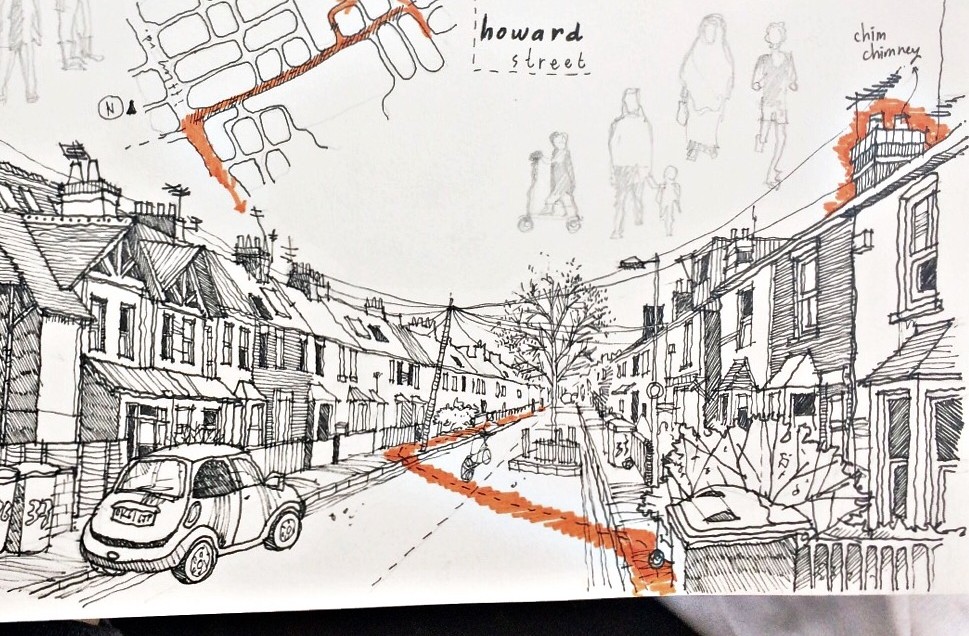
Sketching: An Ode to Burnt Orange, Pen, and Paper


Exploring ways to better understand things surround oneself, in times of traveling.

Danny Boy - Eric Clapton

Just last night, I tried this piano app Synthesia, and played it with my little nephew and his mum. I can't play any music instrument (only know the super basic thing on guitar!), so playing it - even only through the screen, and with colour-coded guides - was much fun. The app doesn't have too many songs, it has mostly classical tunes, children songs, traditional folk songs, and very few oldies (!), but these are enough for a beginner to play with. Then we saw Danny Boy on the list.

People in the house had always have this sentimental fondness of the song, especially since dad used to turn on the Adrian Brett's album Echoes of Gold (I always remember it as only 'Suling Emas'!) repeatedly when we were little kids. As I was a bit older, I found out the story behind this traditional Irish folk song about a message from a parent to a son; that's beautiful but rather painful.

Here's a cover version of the song that I've just found, played beautifully by Eric Clapton. To me; it's impossible not to get a little teary eyed while listening to this, knowing the heartbreaking event he had gone through back in the 90s. Think the original tune (and the lyrics) had always meant to be like what he intended for this cover version; simple and pure.


Sketching: A Brief Trip Down Memory Lane - Part I

Two of the cities in the UK that I've visited alone by myself quite often during few years back were Bath and London. Bath - the city itself is not very big in size, but everytime I went there, I always found new spaces to explore - be it a texturised building facade, a hidden secret garden, or simply an alleyway. It is kind of the same with what I felt of London - the city always has something new to offer, and of course spaces to explore, it also has tonnes of corners or quiet areas for us solo travelers to ponder and to appreciate the surrounding spaces.


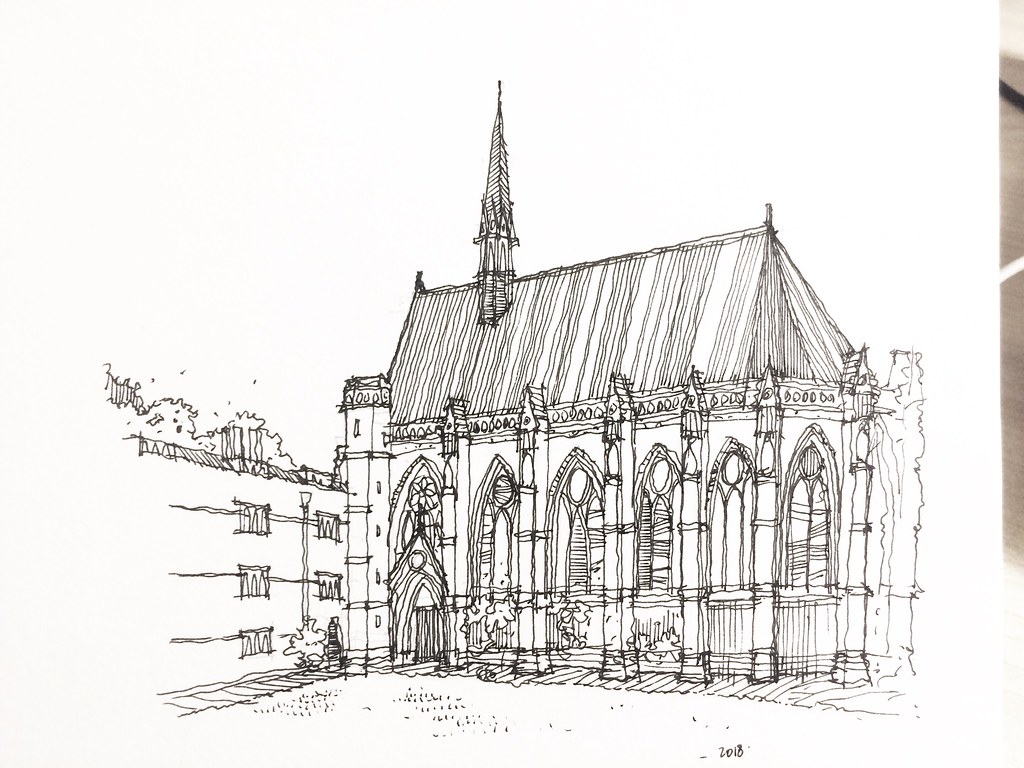
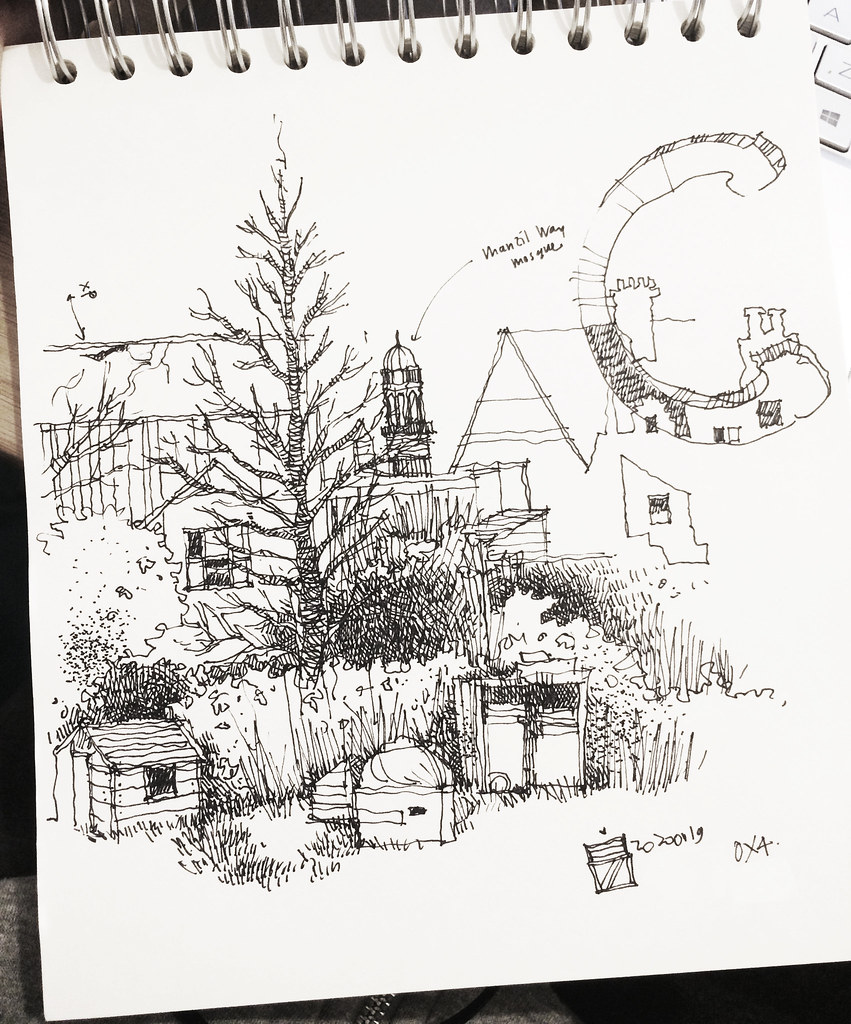
Top left was from solo London trip, having a brunch inside a cafe in Victoria Station, overlooking the building just across the road. The middle one was obviously Bath, but was sketched few days ago (not a live sketch), as I was reminded of the city, and thought of doodling something about it. Top right was in Oxford, a night before a trip fly home. Sketches - the ones that one did - surely can bring back some memories in a much better way than merely photographs.

The Garden Keeper

Found a lecture note by Bruno Guiderdoni, an French astrophysicist and a convert to Islam, about the correlation between Islam and science, in this case particularly on how science cannot be separated from faith and ethical values. Hamza Yusuf mentioned about him in one of his talks, where he said - something along the line of - religion has to be able to reach or to be understood and followed by the simple people (people who don't study very deeply) and be able to satisfy the thinking of the brilliant people (people who study); in which I found a very beautiful meaning of religion. The excerpt below is taken from the lecture note, the part that I found very inspiring and is an impactful message in society and environmental sustainability context, and I thought to share it here in the blog for the readers and as a reminder for myself.

"According to the Islamic doctrine, the human being is created from clay and from God’s spirit, to become "God’s vice‐regent of earth". The human being is the only creature that is able to know God through all His names and attributes, and it is put on earth as a garden‐keeper in the garden. Our relationship with other living creatures on earth is not that from the upper to the lower level, with the concomitant possibility to exploit all "inferior" beings", but that from the central to the peripheral. The "central" position of the garden‐keeper on earth is the position of the watchman who equally cares after all the inhabitants of the garden. This implies a sense of accountability for all creation, and should lead to humility, not to arrogance. As a consequence, we can eat the fruits of the garden, but we have no right to uproot the trees, which do not belong to us. The power that science has given to us must be accompanied by a greater sense of the ethic that is necessary to use this power with discrimination and intelligence. To say the things in a few words, we must not do all what we can do, very much as Adam was not allowed to touch one specific tree in the garden. This prohibition makes us free, because freedom requires the possibility of a choice. This symbol of the garden keeper in the garden has a strong echo today, with the current debates on how to deal with global warming, the share of natural resources in a sustainable way, or the preservation of biodiversity."


"... It (the human being) is put on earth as a garden‐keeper in the garden."

- Bruno Guiderdoni


The note above reminded me of the call to tread or walk humbly on the earth (Qur'an 25:63); in any kind of actions or professions that we do, because we are meant to only be the care-takers of the earth, its living world, and its resources. We don't own anything, nothing that we have is truly ours. We are meant to cultivate the earth (imara) and sustain/guard what is there for the next generation (istikhlaf), which are parts of worship to God (ibadah). To be somebody who takes care of the garden; indeed is a very accurate definition of human being.

The full lecture note can be found here.

Oxford Botanic Garden: Roam Virtually

If there's one place in Oxford that I'd really keen to go and see again someday; it'd be the Oxford Botanic Garden - which was one of the many places that I visited very often - almost every weekend I'd go there to just roam around. Even registered for a yearly pass for the last 2 years! It was sort of a 'hideaway' place from daily routine. Moreover, it is located in the fringe of the city centre - to be exact in the Rose Lane OX1 4AZ, only few mins walking from the Plain - when in the garden; one could easily feel being in the centre where everybody is, whilst at the same time being somewhere secluded in solitude, surrounded by nature.

Yesterday, when I opened the website to find an info about planting, I saw a link that says virtual visit. It's a common thing recently to experience things and locations virtually due to the global pandemic, but I've never heard about this cool thing; that the Botanic Garden can now be visited virtually! It's only a little more than a month since the last time I visited the garden, but I've missed it already; especially the tropical Glasshouse. The last time that I visited with a friend in late June; the Glasshouses were closed due to social distancing. I was so happy to know that the virtual visit applies to the Glasshouses as well. Below are some shots that I took during my 'visit'!

Heading to the Lily House

Even the entrance bit is super lush with greens!

Welcome to the (Water) Lily House


The (Water) Lily House - is my favorite part of the Glasshouses clusters. Of course, because it has the 'home' vibe! By 'home' vibe; I mean Indonesian temperature. :p Whenever I missed home during few years back, I've always run to the Garden and roamed around the Lily House; feeling nostalgic and sentimental. Familiar plant colours and shapes, familiar weather, and familiar feelings, too. I felt I was not too far away. My energy then got recharged easily soon after.


Broad leaves, exotic colours, and unusual patterns

My fave corner of the House :) Can you see the ferns in the shade below?

The 'home-y' vibe: South East feel in the North


Compare to many other botanic gardens in the UK, the one in Oxford is relatively small in size - though it has quite plentiful plant collections. Some had been captured also in my Flickr album, dedicated to the Garden. The city surely has many things to offer, but if you ever visit the city someday, be sure to go visit the Botanic Garden. Because... Who doesn't love plants?

Sketching: Oxford

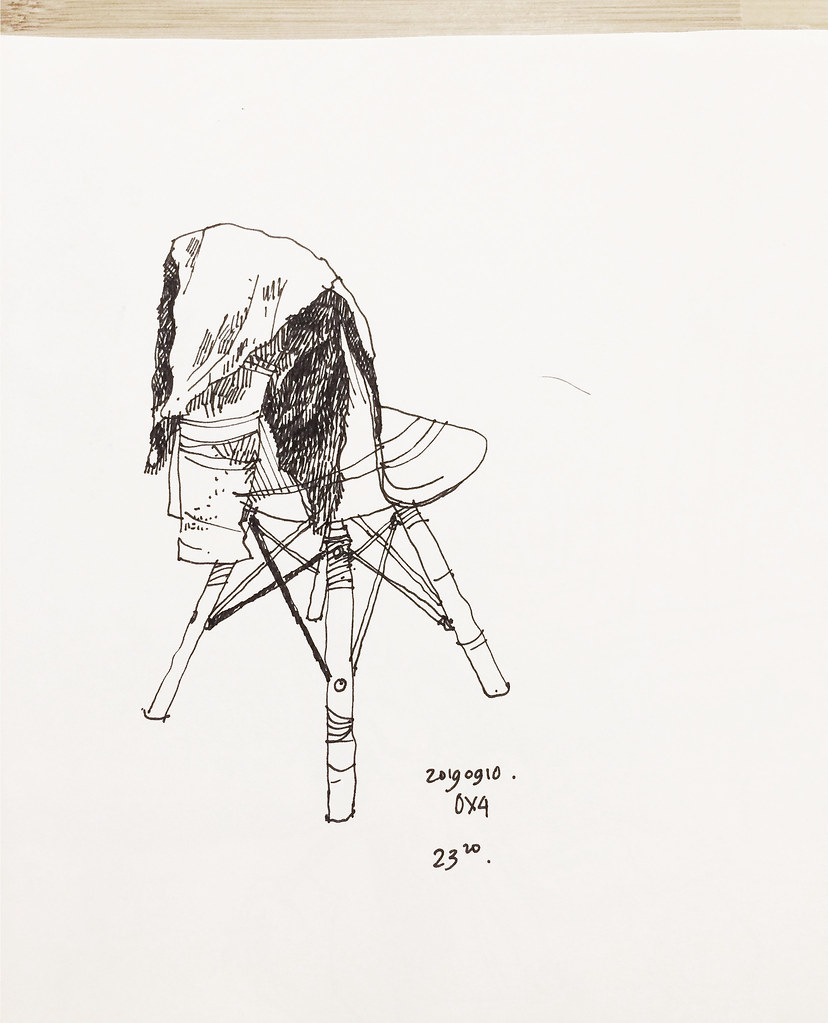
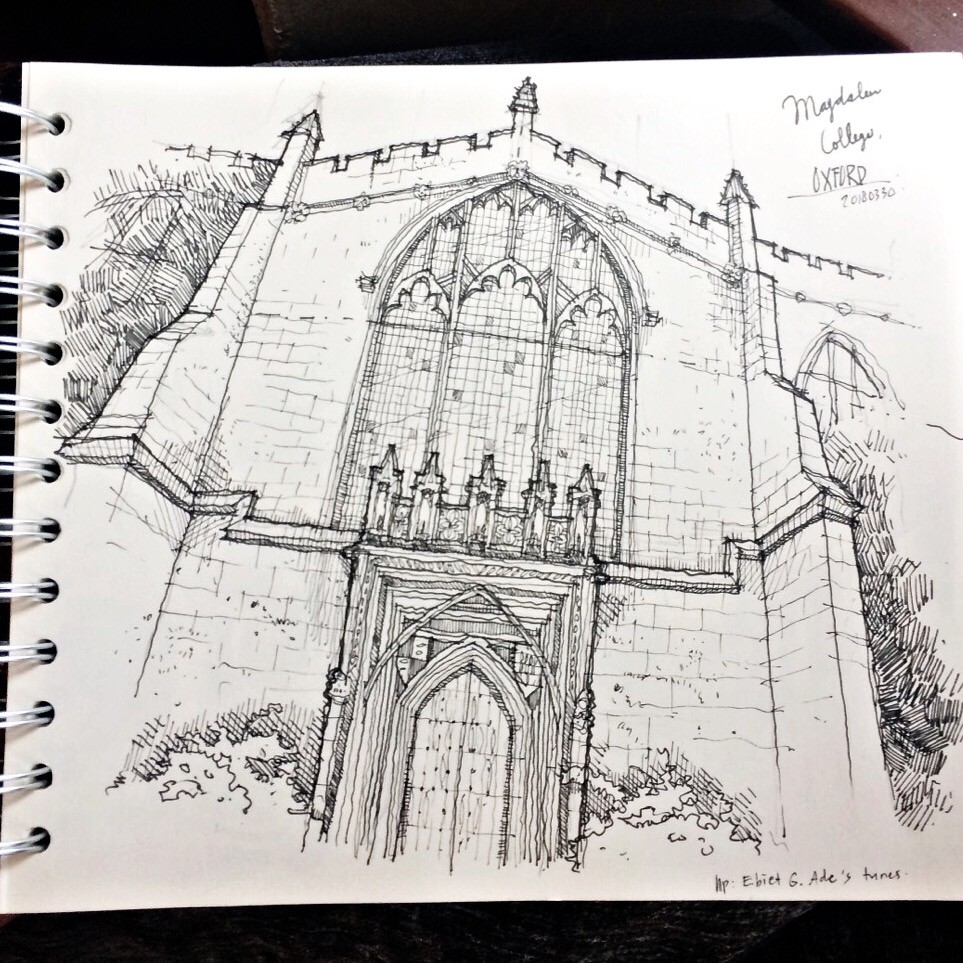
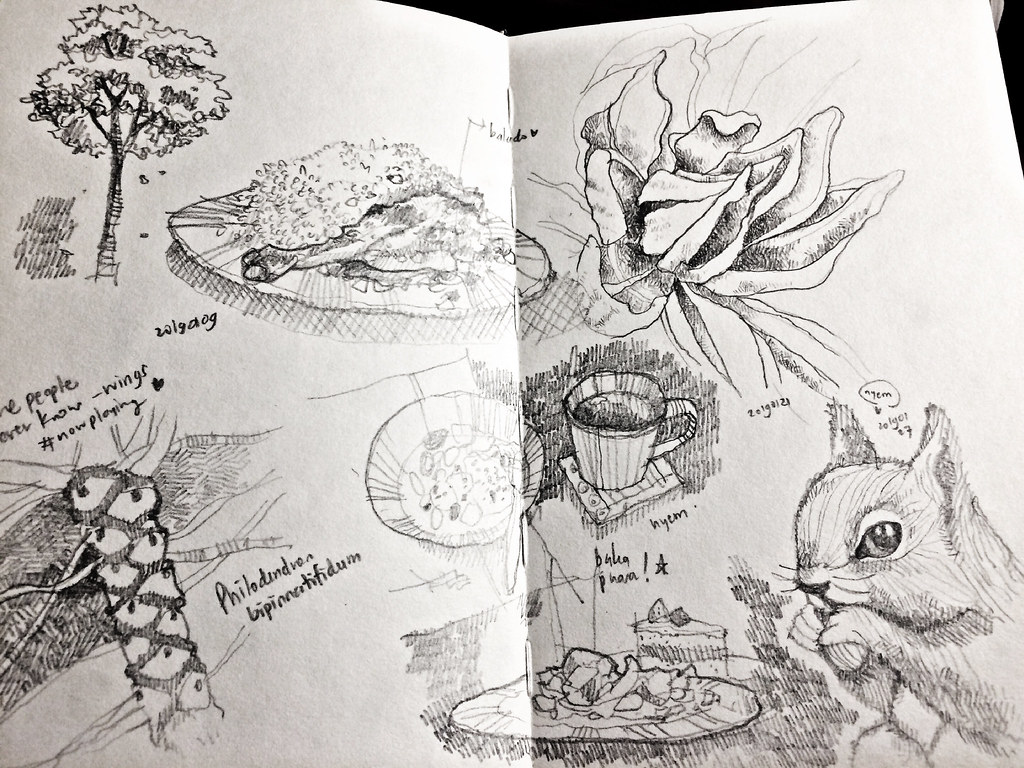
Moving to one city after another, I now truly realised that every city has its own particular vibe, that reverberates into us and gives us its 'energy'; which each of us translates into our own terms. I don't know about you, readers, but sketching - was one of the ways I enjoyed and experienced Oxford. Below are few of them that I've put on Sketches set on Flickr, though there are still many of doodles in my notebooks everywhere. I started to enjoy it again after couple of years, and hopefully will be able to do more of it in my hometown.


Black and white style with only pen and paper is what I like doing at the moment, as I'm still learning the shadow-light rendering. Didn't realise that I actually have many colour medias that I kept in my room back in my hometown (got a new watercolour set also as a gift from the lovely Oxford people!), so will probably try more colourful stuffs later.


"The purpose of 'ilm is to enable us to read the world, to know what it means in its deep reality, to see it as signs so that we can bear witness to the being and the unity of the One; who is the Author of the world."

- Abdal Hakim Murad / Timothy Winter


"Remember whene'er you hear this song, life is a trip full of discovery!"

- Kapp'n (Animal Crossing New Leaf)


Image by Elizabeth on Etsy.

Book Review: How To Stop Time

Living in the twenty-first century, moreover with this era of digital, makes time feels running so fast. In a meantime, suddenly you feel old. You feel like you haven't done enough and experienced enough of a moment or of a place, because there is just not much time.

“The longer you live, the harder it becomes. To grab them. Each little moment as it arrives. To be living in something other than the past or the future. To be actually here.”

Upon looking at the book title and synopsis, I felt intrigued to read it. The story is about Tom Hazard, a guy who has an anageria syndrome and is 437 years old. Tom spends most of his centuries life time on a quest in search around the world of his and his love Rose's daughter named Marion, who inherited the same ageing syndrome. They were separated around 400 years ago, Tom believes that Marion is still alive and keeps looking for her.

After living life for centuries with difficulty due to people's judgement over the syndrome, Tom gets a help from Hendrich, the leader of Albatross Society, a secret society to protect the lives of albas. An alba - using the same name of a bird species who has longer life compare to most bird species - is a human species who has the anageria syndrome. Tom joins the society, which means he has to follow the rules: to change self identity and move out from a place every 8 years and to not fall in love. These rules are made in order to cover and protect himself and the members of the society. After the long search, Tom finally meets his daughter, but Hendrich - who is overly paranoid of possible threats to albas existence - betrays Tom, which later makes Tom realizes that what he always wanted to do is to live his life again; an ordinary life where he could be himself and fall in love.

The albas in the story have many identities throughout their life time, for instance during his 400 years time, Estienne Thomas Ambroise Hazard had been known as Tom Smith, Edward Cribb, Tom Winters, and the current one is Tom Hazard the history teacher. He had moved many times from one place to another. I like the idea of it, which must have made one feels almost like a nomad. And of course; the idea of being anonymous in public, while at the same time knowing about almost everything history wise. But having many self identities must really be exhausting for one in a long term. As a human, you have a tendency to be recognised as who you really are, can freely do what you want.

The interesting thing about the story is that it is told as a series of history flashbacks from centuries ago that feels almost like a time-travel. The character even had acquaintance with Scott Fitzgerald, worked together with Shakespeare, had a dinner with Charlie Chaplin, and even went on a voyage with captain James Cook.

Another interesting bit of the story is the society's rules. One of the rules is not to fall in love; which means not to have attachment. Love is what makes you want to stay and gives the possibility to settle. The context of love in the story is a human relationship kind of love, but in a wider term; it could always be something universal. A love of food, of a place, or simply a love of an air, and of a moment; can be a reason for you to want to be you and experience the love as yourself; not wanting to become someone else or go somewhere else. Love gives purpose or meaning to life, and therefore stops time.

“History was - is - a one-way street. You have to keep walking forwards. But you don't always need to look ahead. Sometimes you can just look around and be happy right where you are.”

Human tends to have fear of the future, therefore becoming anxious about the present and almost always constantly mourned about the past. You won't really experience and do your best while being yourself in the present, if you keep having a battle in your head about the stuffs that had gone and the things that are about to come. To be human means to be part of time and respect the time by living life; one that has a meaning and purpose.

Image was taken from Google Images.

Book Review: Where'd You Go, Bernadette

Visited a local charity shop nearby last year and saw the book in the corner. I didn’t notice till I found the cover a bit catchy (yes; I judge a book by its cover) and then read the synopsis on the back. The story seemed to be funny and interesting, moreover it mentioned about the profession 'architect'. Without thinking twice, I gave it a shot.

Bernadette Fox was an extraordinary lady architect - who feels like a failure after her architecture masterpiece got destroyed by a rich neighbour with bulldozers. She decides to move with her husband to live a new life in Seattle. But it doesn't end there: she stops doing architecture, she has miscarriages, and when she finally has a child - now is a 15 years-old daughter Bee - the child is prone to serious health problem, the city and its people doesn't seem to fit her, and later her husband Elgie Branch cheats on her. Because of her certain super silly circumstances (her careless frequent correspondence with a virtual assistant who is actually a Russian mafia, her accidental mud flood on her neighbour house, and other silly things); people - including her husband - think that she is mentally ill and she needs treatment.

Therefore, she escapes. She runs away, nobody knows where she is. Bee and Elgie try to find her everywhere, and finally find her in Antarctica; where she contemplates about her life. At the end of the story; she finds her balance and becomes uplifted as she suddenly been assigned to design a new station in the South Pole; a project that intrigues her and makes her feel very challenged on doing; which made her move forward and think positively about her life in this absurd world once again.

It basically tells the reader on how to be a parent; especially a mother. There would truly be ups and downs in life; the joy that people will experience once they become parents. Things in life won't always go perfectly, and it is nice to have people who understand. Other people would never understand us as deeply as a family would do. There might be a time when we think that our life is a failure, but if we got family with us (in this case a child or parents; the ones who will stand by our side and believe in us, and of course will try to find us when we're gone!); it is enough. Though, sometimes there is also this ironic case where even our closest person in the family doesn't understand much nor put trust in us. It wouldn't hurt to give them a chance and to have a little faith in them, right?

Everyone needs a break: and everyone goes with it in their very own way. In their own time. It is only natural to do, especially when people experience something really annoying, disappointing, and think that they may have had enough; as long as the break is not something harmful or bad to them and to their loved ones. Fox was in an emotional pain for so long that she became bored of her life, which made her disappeared for a while. But still; I find it very bizarre (and... May I say: inspiring?) that her method is to runaway to Antarctica.

There are many Beatles references in the story. One of them is the Here Comes The Sun; a song that is from Bee and her mom’s fave album. I could definitely relate to this; as I also very much think that the song really is a hopeful song. I remember one night when I was still in junior-high school years ago and seem to hate everything and not satisfied with life (on the account of puberty age!); I put the records on and listened to the song. It was so soothing that I found myself contemplating on being more grateful towards life. I still experience the same effect now that I'm much older. Well done, my favorite Beatle. This song is still, and will always be one of my favorite tracks from Abbey Road.


"My heart started racing, not the bad kind of heart racing, like I'm going to die. But the good kind of heart racing, like, Hello, can I help you with something? If not, please step aside because I'm about to kick the shit out of life."

- Fox, on unexpected opportunity of doing her passion again


The main character in the story - Fox - has a quite unique personality; she is witty, quirky, and a little unsociable lady. At the same time, she is also very ideal and passionate about architecture; not only about the subject itself, but also about the process behind the subject. She is enthusiastic about the creation of architecture; which makes her enjoy the 'crafting' part of it and gives her inspiration to produce novelty design ideas. The Twenty Mile House - her design that gets demolished - is one the first architectures with zero waste; designed using only materials from no farther than twenty miles. But inspite of her genius; she is rather silly, and has peculiar thoughts on things around her; which makes the character lovelier and heart-warming.

To be honest, I think the novel tells a sad big-blow life story of Bernadette Fox; and I found it rather weird to laugh when I read novels... But actually I laughed a lot while reading this. The author Semple told the miserable story of Fox in a heart-warming-ly funny perspective, in epistolary style (just like this story). It really is packed with real funny stuffs. I just recently found out that the novel will be adapted into a movie which will be released by the end of this year.

The last but not least... What I really learned from the story is: how important it is to have a passion in life. Why? Because it keeps you going. It motivates you to do more, to live life - eventhough life is disappointing (I still think there is no ultimate escape than to seek refuge to the Creator, but still, passion will make you even a better person). Passion could push you to the edge to expand your horizon. It gives your life a meaning, adds value to life. Fox should have hated architecture: her masterpiece gets torn down, her whole career is ruined, and she feels like a failure. But she doesn't hate it, in fact she misses it and takes another opportunity of doing it: that is because it is her passion from the very beginning. Which helps her to stand on her own two feet again. You can fail, then you could possibly fall, but you will get back up if you have passion in life.

And if you want to take a break for a while from your current life; Antarctica could be an option.

Image was taken from Google Images.

hello ✽

This is just a test! I miss blogging! :)